
Compassion Makes a Delayed Landing

Trials are often our best teachers. Some say that when you fail you can win if you learn something. After consulting an ADHD coach with a medical degree, a knowledgable psychiatrist, and being evaluated for ASD (autism), I have come to the conclusion that my adverse physical response to my first flights as a flight attendant wasn't a failure, it was a predictable and even preventable consequence of neuro-burnout particular to those of us who experience life neuro-nontypically.

Neuro-burnout and neuro-nontypical are NOT scientific terms, nor do I claim to have coined them, but they name, for me, ways I have experienced the world. I am diagnosed with ADHD and have autistic traits, though not diagnosed with the latter. Burnout happens when I have been using adaptive coping strategies, which requires extra work and energy, too much or for too long.
What does my psychological self-disclosure have to do with aviation? Everything. How many people working in aviation today are neurodiverse, let alone, how many travelers in airports? We can't necessarily tell by looking without the proverbial broken leg in a cast to point to. Point being, neurodiverse people have invisible differences and we are everywhere.
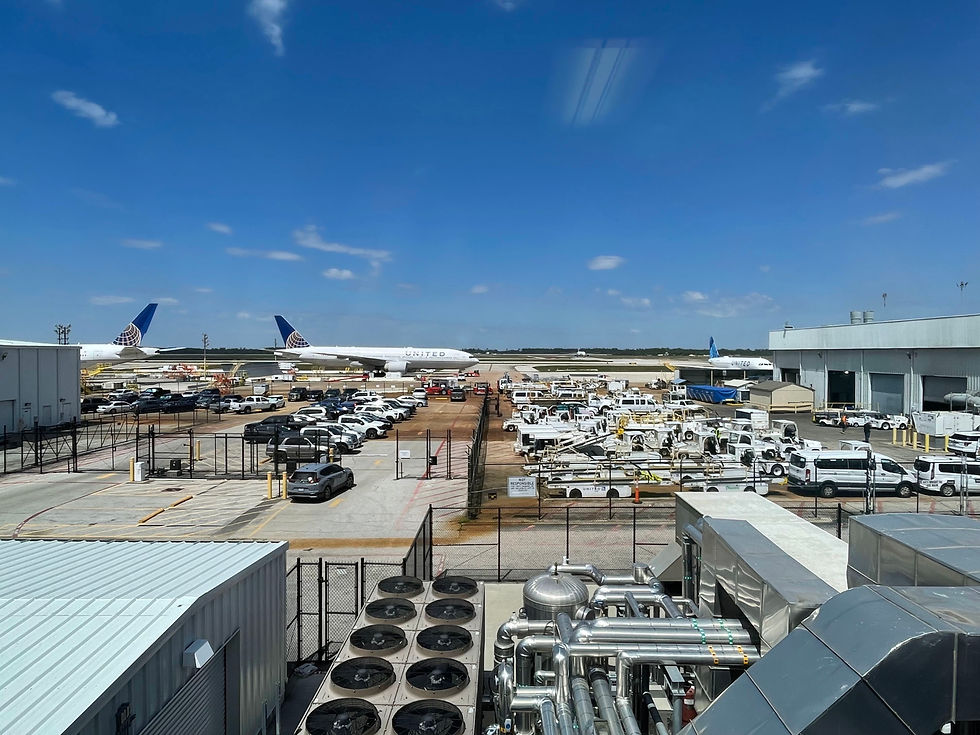
For example, I attended flight attendant training in another state. That training was nearly two months of being away from all that was routine and familiar to me. Usual ways of self-regulating my highly active nervous system were absent.
I didn't have my spouse to talk to who undertsands my experience of the world being neurodiverse himself. I didn't have my children to cuddle and ground with at the end of a challenging day. My usual phsyical outlets like lap swimming and running were limited by location, weather, and little time and energy. Not to mention, there was no sex (no Mile High Club for me), which takes me out of my brain and into my body and gives me a much needed dopine hit.

Instead, I was in classrooms and training centers, forcing my attention, for 14 hour long days surrounded by dozens of people I had never met, making social battery-draining small talk on our short breaks. Then we'd crowd into large buses together and commute to our hotel where we each shared a room with a randomly assigned roommate.
Some days the only fresh air I breathed was walking to and from the bus. Some days the only time I was alone was shitting or in the shower. No joke.
I could do it, but it was taxing in so many ways my system is not set up to handle well. The exhaustion was accumulative.
By my graduation and wing-pinning ceremony, I was a shell of myself, so drained physically and mentally that I felt out-of-body. Luckily, I fell into the loving arms of my husband who flew out for the ceremony.

Once home, I slept like the dead and still woke as a zombie. I felt strangely numb. I could barely relate to my family, who were kind and patient and just grateful to have me home – but only for six days.
Six days to recover from seven weeks of intense training was simply not enough. My assignment call came in the day before I was to leave. I refilled bags I had just unpacked and headed to the airport in my itchy, hot uniform.
I used the transparent approach; I made sure my crew knew, since I was the lead FA, that it was my first day on the job. The crews of both flights, including the pilots, were extremely supportive, and my passengers, even in First Class, were easy-going. Though stressed about being on my first flights, I performed my tasks as expected and was even told that I was managing like a pro by a seasoned flight attendant.

Outwardly, I was able to do my job, inwardly my computer was crashing. I was experiencing Emotional Distress Syndrome, which is a chronic state of emotional stress that deteriorates one's stamina, tolerance and well-being, according to Sari Solden and Michelle Frank, authors of A Radical Guide for Women with ADHD. I hadn't had time to recover or regulate my nervous system from training, and I was in one of the most intellectually demanding parts of any job, the beginning. And there were further demands.
I was meeting new sets of people. I was in an overstimulating environment of loud noises, various lights and smells, not just in the plane but also in the airport. There happened to be no break in stimulus since the Mexico City airport attaches directly to the hotel as if it were a subway tunnel.
I was physically uncomfortable, hot and sweaty in my synthetic clothes. And, I was managing a migraine that normally would have sent me to bed in a dark room for a day.

I did not give up, but it took all I had to finish the return trip hours later.
Once home, I faced the reality that I could not go on. To survive I needed the time to recover that I had not been allowed. The airline had made it quite clear that as a flight attendant in probation there was little room for anything less than meeting their expectations. The only avenue I felt I had was to resign. My exhaustion – and my shame – as well as my all-or-nothing thinking, a bench mark of ADHD, kept me from seeing other options.
Would I do things differently now? Absolutely. First, recognizing I was suffering neuro-burnout, I would have sought medical help. A combination of rest to recover from training and medication to help me cope with the increased demands of my new job, would have enabled me to continue on my path as a flight attendant.
Second, ADHD coaching would have helped me reprogram my thinking and approach to my new lifestyle to make it more sustainable. Finally, I would have appealed to the airline to make accomodations for my disability, which is what non-discriminatory policies are meant for. We all deserve to do what we love and be the best we can be.
To this day, I have zero regrets about my time with United in flight attendant training (except that I had to leave my Hawaiian Airlines ohana at SFO). I proved I could graduate from one of the most demanding training programs. I made lasting friendships. I have even more insight into and love for aviation.
If given the chance, I would take flight again, this time with better strategies and more compassion for my experience. Who knows what the future holds in the boundless skies!


Comments